
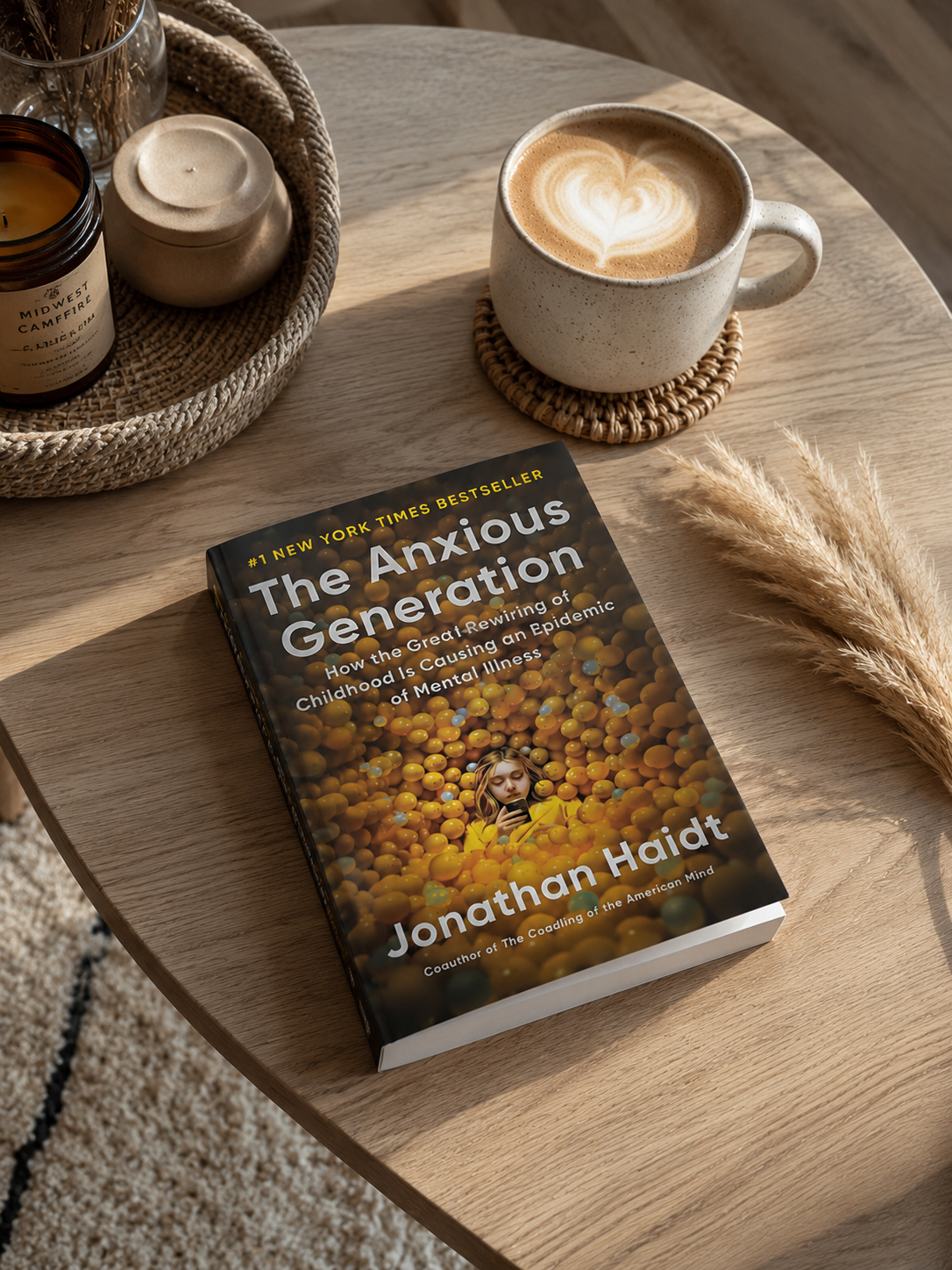
Why This Book Found Its Way Back to Me
Some books arrive at exactly the right time. The Anxious Generation had actually been sitting on my reading list for quite a while, but I recently circled back to it because it was selected as a book club pick amongst a group of us who meet every couple of months at Catalyst Movement to discuss various health and wellness books with other like-minded individuals.
I always appreciate reading books like this in community because the conversations tend to move beyond simply asking whether we liked the book and into deeper reflection about what we are collectively noticing in ourselves, our relationships, and the world around us.
Given how often themes like burnout, anxiety, emotional overwhelm, nervous system dysregulation, and disconnection emerge in both personal and professional conversations, I was curious to explore Jonathan Haidt's perspective on the growing mental health challenges facing younger generations and how these same patterns may also be affecting adults.
Understanding the Premise Behind The Anxious Generation
At its core, The Anxious Generation explores the growing mental health crisis among children and adolescents and the cultural shifts that have occurred over the last 30–40 years, particularly with the rise of smartphones, social media, and constant digital connection.
Jonathan Haidt describes this shift as moving from a "play-based childhood" to a "phone-based childhood." The book examines how increased screen time, social media use, reduced independence, and decreased in-person connection may be contributing to rising rates of anxiety, depression, loneliness, self-harm, and emotional dysregulation in youth.
The book itself is fairly research-heavy, drawing from psychology, developmental science, cultural trends, and statistical research. But what makes it impactful is that it speaks to something many people already feel happening internally, even if they haven't fully had language for it yet.
That sense of always being "on."
The difficulty focusing deeply.
Feeling connected online while simultaneously feeling emotionally disconnected.
The exhaustion that comes from constant stimulation and fragmented attention.
Although the primary focus is on children and adolescents, I found myself thinking about adults throughout the entire book. Many of the themes felt strikingly similar to conversations we regularly have at Lokahi Wellness Collective with individuals navigating anxiety, burnout, relationship challenges, and the pressures of modern life.
What Stayed With Me After Reading
Human Connection Cannot Fully Be Replaced by Digital Connection
One of the strongest themes throughout the book was the importance of real, in-person connection for emotional well-being. While technology allows us to stay connected constantly, it can also create a false sense of closeness while increasing loneliness and disconnection.
As humans, our nervous systems are wired for co-regulation, safety, and connection through physical presence—eye contact, shared space, laughter, movement, and feeling emotionally seen. Technology can support connection, but it cannot fully replace those experiences.
This is something we often witness in our work at Lokahi Wellness Collective. While online connection can be meaningful, many people are longing for deeper experiences of belonging, authenticity, and community.
Fragmented Attention Is Impacting Our Well-Being
This was probably one of the themes I reflected on most deeply.
We are living in environments that are constantly competing for our attention—notifications, scrolling, short-form content, endless information, and constant accessibility. Over time, that level of stimulation can shape how we think, feel, regulate emotions, and relate to ourselves and others.
What stood out to me is how normalized this has become.
Many adults describe feeling mentally scattered, emotionally exhausted, overstimulated, or unable to fully slow down. For some, these experiences can overlap with symptoms of anxiety. Often there is shame attached to this experience, when in reality many people may simply be responding to environments that rarely allow the nervous system to truly rest.
From a trauma-informed perspective, this feels particularly important. When our attention is continually pulled outward, it becomes harder to notice what is happening internally—our emotions, needs, values, and the signals our bodies may be sending us.
We Need More Space for Play, Presence, and Rest
Another important takeaway was the reminder that humans need space for boredom, creativity, exploration, rest, and genuine presence.
So much of modern life pushes productivity, stimulation, and constant engagement, yet many of the things that support emotional resilience—play, movement, stillness, meaningful conversation, time outdoors, and community—are often the very things being crowded out.
A quote that stayed with me was:
"Children need a great deal of free play and independent exploration to mature into competent, thriving adults."
Honestly, I think some version of that is true for adults as well.
How These Themes Show Up Beyond the Book
One of the things I appreciated about this book is that it invites reflection rather than perfection. It's not necessarily about eliminating technology altogether, but becoming more intentional about how we engage with it and how it impacts our mental health, relationships, and nervous systems.
Some practical ways to apply the ideas from the book include:
Creating more intentional boundaries around smartphone and social media use
Scheduling screen-free time throughout the day
Prioritizing face-to-face connection and community where possible
Spending more time outdoors or engaging in activities that encourage presence
Becoming more mindful of how technology affects mood, sleep, attention, and emotional regulation
Allowing space for rest, boredom, creativity, and stillness without immediately reaching for stimulation
At Lokahi Wellness Collective, many of these themes naturally emerge in therapy. Whether someone is navigating anxiety, burnout, trauma, relationship challenges, or a general sense of disconnection, we often explore how external environments and internal experiences interact.
Sometimes healing is not only about learning new coping strategies. Sometimes it begins with slowing down enough to notice what our minds and bodies have been trying to communicate all along.
Reading This Through a Therapist's Lens
Although the focus of this book was on children's mental health and the changes that have occurred over the last several decades, it consistently brought me back to thinking about adults because this is the population I primarily support.
Many adults struggle with the same challenges discussed throughout the book—fragmented attention spans, social isolation, emotional exhaustion, difficulty being present, and seeking connection online rather than in person.
A couple of thoughts stayed with me after finishing the book.
The first was the responsibility we have as adults to reflect on the environments we are participating in and the patterns we may unintentionally normalize, not only for ourselves but for future generations as well. If we do not begin addressing some of these patterns, I can see how the long-term impacts may continue to ripple forward for years to come, much like unaddressed trauma often does within families and communities.
The second was more of a curiosity around the overlap between fragmented attention caused by chronic smartphone and social media use and symptoms commonly associated with ADHD. To be clear, I am not suggesting they are the same thing, but it did leave me reflecting on how overstimulation, constant distraction, and nervous system dysregulation may influence our capacity for focus, presence, and attention over time.
I don't think the answer is fear, blame, or abandoning technology altogether. Rather, I think it is cultivating awareness and asking better questions about the relationship we want to have with technology and the role we want it to play in our lives.
Who I'd Recommend This Book To
I would recommend this book for:
Parents and caregivers navigating conversations around technology and mental health
Individuals feeling overwhelmed, emotionally depleted, disconnected, or constantly distracted
Mental health professionals interested in the broader cultural factors impacting emotional well-being
Educators, helping professionals, or anyone working with youth
Adults wanting to better understand the relationship between social media, nervous system health, anxiety, and connection
Just a heads up, some readers may find parts of the book anxiety-provoking, particularly the discussions around youth mental health trends and the long-term impacts of technology use.
Why This Conversation Matters
Overall, I found The Anxious Generation to be thoughtful, timely, and deeply relevant to many of the mental health conversations happening today.
What stood out to me most was not simply the discussion around technology itself, but the deeper invitation to reflect on what humans actually need in order to feel emotionally well: connection, presence, play, rest, safety, community, and space to simply exist without constant stimulation.
At Lokahi Wellness Collective, we often talk about healing as something that happens not only through insight, but through connection—to ourselves, to others, and to the parts of us that may have been overlooked while navigating the demands of daily life. This book felt like a meaningful reminder of that truth.
Even if not every argument in the book resonates with every reader, I think it opens up important conversations worth having—especially as we continue navigating a world that increasingly pulls us away from ourselves and each other.
With curiosity and reflection,
Lisa
Founder & Counsellor at Lokahi Wellness Collective