
How Emotional Absence in Childhood Shapes Adult Relationships: A Review of The Emotionally Absent Mother
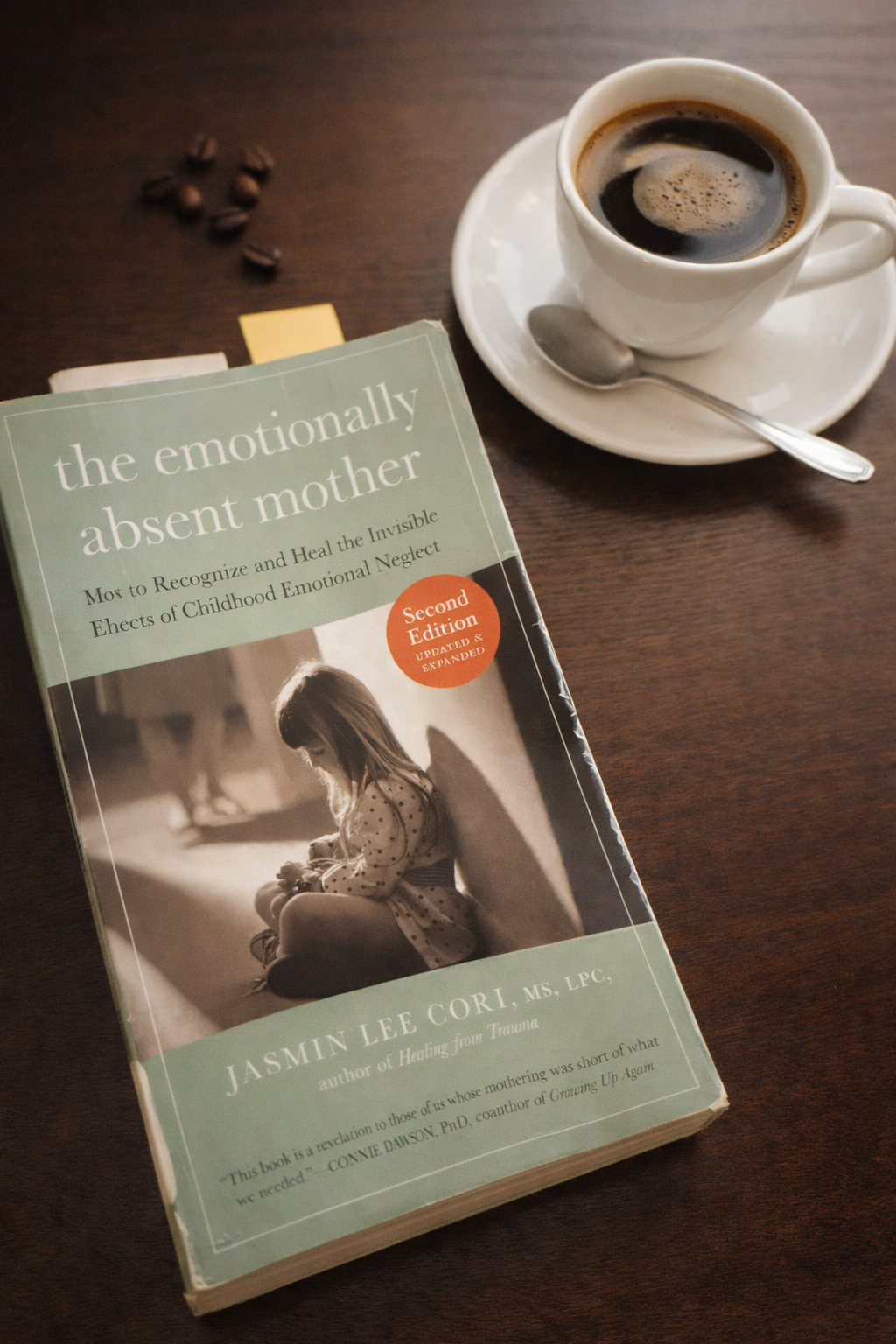
As a trauma therapist, I’m always on the lookout for resources that help clients make sense of their inner world with compassion rather than blame. The Emotionally Absent Mother by Jasmin Lee Cori was one of those books that immediately caught my attention—not because clients were naming obvious childhood trauma, but because so many were saying something quieter:
“My childhood wasn’t that bad.”
And yet, they were struggling with anxiety, depression, low self-worth, and painful patterns in relationships.
I found myself wanting a way to explain how early relational experiences shape us without vilifying our caregivers—and without minimizing the very real impact of what was missing. This book does exactly that.
Naming What Was Missing (Without Placing Blame)
At its core, The Emotionally Absent Mother explores what happens when a mother—or primary caregiver—is physically present but emotionally unavailable. Cori, a licensed psychotherapist, brings together clinical insight, attachment theory, and real-life examples to describe how emotional absence (not abuse, not cruelty, just absence) can leave lasting imprints on a child’s emotional development.
What I deeply appreciate about Cori’s approach is her balance. She does not blame mothers, nor does she dismiss the pain of the child. Instead, she helps readers hold both truths at once: a caregiver can have done the best they were able to do and a child can still grow up with unmet emotional needs.
She introduces the idea of a “mother gap”—that space where consistent emotional attunement, protection, and encouragement should have been. Many adults feel the effects of this gap long before they ever have words for it.
What Does a “Good-Enough Mother” Provide?
One of the most powerful sections of the book outlines what Cori calls essential maternal functions. A “good-enough mother” doesn’t have to be perfect, but she does need to be emotionally responsive in consistent ways.
Some of the core messages a child needs to internalize include:
“I see you.”
“Your needs matter.”
“I’m glad you’re here.”
“I’ll keep you safe.”
When these messages are present, children develop a sense of worth, safety, and emotional stability. When they’re missing, many adults are left with an internal ache they can’t quite explain—only that something essential always felt absent.
Emotional Absence Isn’t Always Obvious
Cori is very clear that emotional absence isn’t always intentional. An emotionally absent mother may be:
Preoccupied with her own stress or trauma
Depressed or emotionally overwhelmed
Limited by her own upbringing or cultural norms
Often, these mothers were never taught how to emotionally attune because it wasn’t modeled for them. Understanding this doesn’t erase the impact—but it can soften shame and self-blame, which is often a crucial part of healing.
Long-Term Effects of Being “Undermothered”
Adults who grew up with emotional neglect often recognize themselves in patterns like:
Chronic self-doubt or low self-esteem
Difficulty identifying or expressing emotions
Struggles with intimacy, trust, or boundaries
A deep sense of loneliness or disconnection
Trouble advocating for their own needs
What stood out to me is how Cori consistently frames these not as defects, but as deficits—skills and experiences that were never fully developed because the environment didn’t support them. That distinction alone offers so much hope.
Healing: Building a “Portable Good Mother”
One of the most meaningful contributions of this book is Cori’s focus on healing. She doesn’t just help readers understand what happened—she offers a path forward.
Through reflection, inner child work, and self-compassion practices, readers are guided to begin meeting the needs that went unmet. Cori introduces the idea of developing a “portable Good Mother”—an internalized, nurturing presence that offers safety, validation, and care when external support falls short.
This can be cultivated through:
Self-compassion and emotional self-attunement
Healthy adult relationships
Therapy and corrective emotional experiences
Learning to receive care rather than pushing it away
As a therapist, I especially appreciated her discussion of the therapeutic relationship and how, at times, it can play a meaningful role in repairing early attachment wounds. That relational healing—when done ethically and intentionally—can be incredibly powerful.
Personal Reflections
While reading this book, I couldn’t help but think of how often clients feel confused by their pain because there was “no obvious trauma.” This book offers language, clarity, and validation for those experiences.
It also reminded me of Mother Hunger by Kelly McDaniel, though Cori’s work feels more gender-neutral and applicable to people of all genders. I found the tone compassionate, grounded, and accessible, and I appreciated the practical exercises woven throughout.
Who I’d Recommend This Book For
This book is especially helpful for:
Adults exploring patterns in relationships or self-worth
Clients with histories of emotional neglect or C-PTSD
Therapists and helping professionals
Anyone who sensed something was missing growing up but couldn’t quite name it
Readers should know that the material can be emotionally activating, particularly for those just beginning to explore childhood attachment wounds. Having support—whether therapeutic or relational—can be helpful while reading.
Final Thoughts
The Emotionally Absent Mother adds an important voice to the mental health conversation by shining light on a form of relational trauma that is often overlooked because it’s subtle, quiet, and normalized.
I wholeheartedly recommend this book to anyone seeking deeper self-understanding and healing. Cori’s use of language—framing these experiences as deficits rather than defects—creates space for compassion, growth, and hope. And perhaps most importantly, it reminds readers that what was missing can still be nurtured, learned, and healed.