
A Counsellor’s Review of Rules of Estrangement: What Relational Repair Really Requires
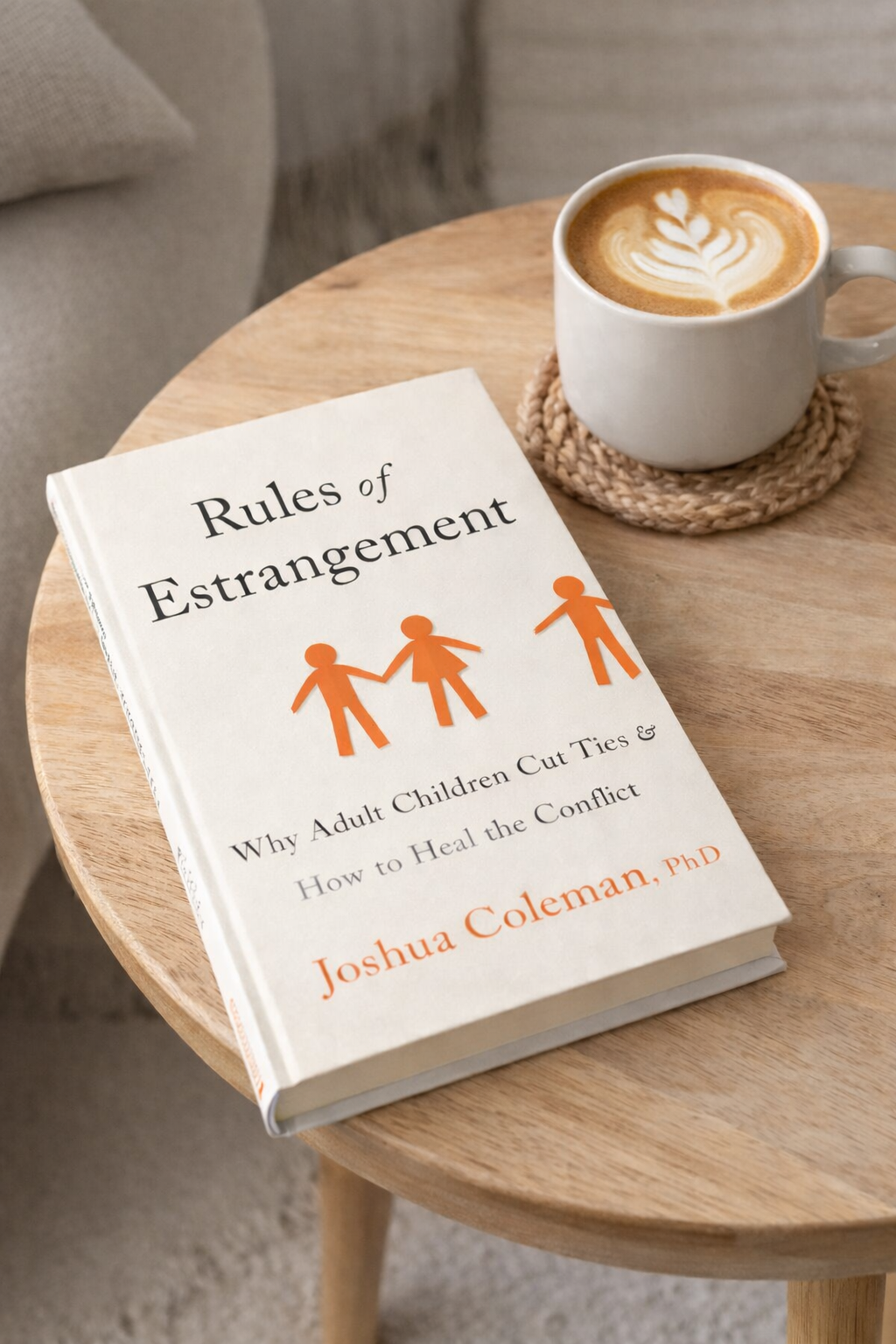
I first learned about Rules of Estrangement: Why Adult Children Cut Ties and How to Heal the Conflict by Joshua Coleman, PhD through an Instagram post shared by Oprah Winfrey, where estrangement was framed as something increasingly visible and even described as a kind of cultural “trend.” Oprah later featured Coleman on her show alongside parents and adult children speaking openly about estrangement, bringing a deeply private family experience into a public conversation.
That framing stayed with me. In my work as a counsellor, estrangement is not something new or trendy — it is usually the result of long-standing relational pain, unmet needs, and repeated ruptures that were never adequately repaired. I picked up this book curious about how it approached accountability, repair, and reconciliation, and whether it reflected what I see clients struggling with in real relationships.
What This Book Is About
Rules of Estrangement is written primarily for parents whose adult children have reduced contact or cut ties entirely. Drawing on clinical experience, research, and case examples, Coleman explores why estrangement happens and what parents can do to respond in ways that reduce further harm and, in some cases, open the door to reconnection.
A central theme of the book is complexity. Coleman pushes back against the idea that estrangement is always about abuse, entitlement, or a single defining incident. Instead, he situates estrangement within broader relational patterns, generational shifts, and cultural changes around autonomy, boundaries, and emotional fulfilment.
The book is practical in tone, offering guidance around communication, emotional regulation, and how parents might approach outreach in ways that feel less threatening to their adult child.
What the Book Gets Right
One of the book’s strengths is its emphasis on reducing defensiveness. Coleman encourages parents to move away from correcting, justifying, or explaining themselves, and instead to focus on curiosity and empathy. He highlights how quickly defensiveness can escalate conflict and deepen distance (an observation that holds true across many strained relationships).
The book also acknowledges the emotional toll of estrangement and names the grief, shame, and confusion parents often experience. For many readers, this validation alone can feel grounding and humane.
Where Tension Emerges: Regulation vs. Authenticity
Where the book becomes more complicated is in how strongly it emphasizes emotional regulation in service of reconciliation.
Parents are frequently encouraged to:
Avoid expressing their own hurt or grief
Validate their adult child’s experience without clarifying their own
Refrain from defending or contextualizing past behaviour
Prioritize emotional safety over personal truth
While this is framed as emotional maturity, it can easily drift into strategic emotional restraint — not outright dishonesty, but not full authenticity either.
From a clinical perspective, emotional regulation can be an important first step. It can help de-escalate conflict and prevent further harm. But regulation alone is not the same as relational repair.
Accountability vs. Appeasement
In my work with adults navigating estrangement, a consistent theme emerges: people are rarely asking for perfect language or endlessly calm conversations. They are asking for accountability.
There is an important difference between appeasement and accountability.
Appeasement often sounds like:
“I’m sorry you felt hurt.”
“I respect your boundaries.”
“I just want to listen.”
These statements can be delivered skillfully and still feel hollow if they lack specificity or personal cost.
Accountability, on the other hand, involves:
Naming concrete behaviours without being prompted
Acknowledging impact without minimizing intent
Making changes that are observable over time
Accepting that repair may never occur
Accountability is inherently risky. Appeasement maintains control.
The book tends to focus on the latter, with the hope that the former will follow. For many adult children, that sequence feels backwards.
Relational Repair Beyond Estrangement
One of the broader questions this book raised for me is what genuine relational repair actually looks like — not only between parents and adult children, but across all relationships.
In therapy, repair often involves slowing down and examining long-standing relational patterns rather than focusing solely on a single rupture. From a nervous system perspective, repeated relational injuries can shape how safe connection feels over time — something commonly explored in trauma-informed counselling.
Across relationships — romantic, familial, or professional — meaningful repair usually includes:
Behavioural change that extends beyond one relationship
A willingness to tolerate discomfort, shame, or loss of outcome
Change that is not contingent on being forgiven
Repair that is driven primarily by fear of losing the relationship often becomes strategic. Repair that is driven by self-awareness tends to be slower, messier, and more credible.
The Paradox of Repair
One of the most meaningful shifts I see clinically occurs when change is no longer contingent on reconciliation.
When a person’s stance becomes:
“I’m addressing patterns in myself because they matter — regardless of whether this relationship is restored,”
repair stops being performative and starts becoming believable.
Paradoxically, this is often what creates the conditions where reconnection becomes possible.
Who This Book Is For — and Its Limits
I would recommend Rules of Estrangement for:
Parents seeking a compassionate framework to understand estrangement
Readers wanting a non-polarised view of family rupture
Clinicians looking to understand the guidance many parents encounter
It’s important to note that the book is written primarily from the parent’s perspective. Adult children — particularly those who chose estrangement for safety or well-being — may find parts of it invalidating or incomplete. The book’s emphasis on reconciliation does not always account for situations where distance remains the healthiest option.
Final Thoughts
Rules of Estrangement adds an important voice to the conversation about family rupture by emphasising empathy, complexity, and self-reflection. At the same time, it risks conflating emotional restraint with relational repair.
In estranged relationships (and in all relationships) reconnection that relies on technique without transformation is rarely sustainable. Genuine repair requires more than saying the right things. It requires change that exists even when reconciliation is uncertain.
Sometimes, the most honest repair begins when repairing the relationship is no longer the goal.
For those navigating ongoing relationships with family members where estrangement isn’t the goal, I’ll be sharing more soon about working with resentment in those dynamics.